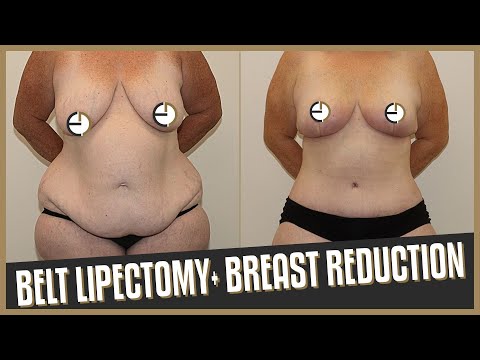
A Body Lift or Belt Lipectomy is a complete reconstruction of the belly and buttocks in one operation. Suitable for individuals who have lost a significant amount of weight, it removes rolls of excess skin and fatty tissue in the lower back, flanks and abdominal region. It also lifts the buttocks and pubic area.
The displayed before and after pictures are provided as an educational tool to demonstrate some of the results achievable from plastic surgery. All surgeries are performed by Dr Eddy Dona and are published with the written consent of the patients.
Speak with Dr Eddy Dona about your suitability, the surgical options, recovery and costs. Our friendly team will call you back to discuss the procedure and schedule your appointment.

A general guide to recovery. Individual recovery varies and your personalised schedule will be provided before surgery.
Your Body Lift procedure is performed in a private hospital under general anaesthesia. Depending on the procedure required, your surgery may take between four and six hours. Here’s what you can expect during the first two days after your surgery. When you wake from surgery, the head of your bed will be elevated and a pillow will be placed under your knees to maximise your comfort. To minimise any potential fluid accumulating in your wounds, four drains are inserted – two from the buttock region and two from the front belly region — this will remain in place on average for two days. You will also have been fitted with compression garments. These garments are fitted to your torso and upper legs to help minimise swelling, reduce tension in the wounds and aid in healing. You’ll have a catheter placed in your bladder. This will allow you to stay relaxed in bed without having to go to the bathroom – the catheter is usually removed on day two. Your IV drip will also be removed on day two after your procedure. This allows you to return home without any drains. To help prevent DVT, you’ll have special massage devices on both legs. These are designed to minimise the chance of any blood cl…
Here’s what you can expect regarding your recovery and wound care during your first two days in hospital.
· Dressings - will cover your scars. These dressings will be removed during your first post-operative appointment, which is on the day you are discharged from hospital. For convenience, patients will often leave the hospital and come straight to our clinic for their first appointment. · Medical tape - will remain on your incisions for the rest of the week after surgery. · Stitches - are dissolvable, so they don’t need to be removed. However, on rare occasions, a stitch can get irritated and may require manual removal by one of our nurses. · Drains – are usually removed on the second day after surgery, before you leave the hospital. At this time, your catheter and any other IV leads will also be removed. · Topical cream: During your first post-op visit, you will be given medical-grade skin care cream to apply to your surgical incisions. We do not use silicone strips or any other topical products. Instead, our medical-grade topical cream provides a natural seal of bees' wax (a binding ingredient in the product), while also sending nutrients deep into the second layer of skin. This topical cream also helps to accelerate healing and increase the formation of healthy scar tissue.
· Showering: You’ll be allowed to shower with assistance while in hospital. Surgical incisions need to be kept dry for one week post-surgery. · Physiotherapy: If required, a physiotherapist will see you on the first day after surgery. This is so they can help you get out of bed and start to mobilise gently. The sooner you get out of bed after surgery, the better. · Pain and discomfort: You may feel discomfort, along with shooting pains or a burning sensation. However, these sensations are usually associated with your drains, and the pain typically subsides. Numbness and tingling sensations will also usually diminish. However, in some cases, numbness can persist. This can occur with any scar or surgical site. Pain is often caused by inflammation and swelling. You’ll receive several LED light therapy treatments which will help to minimise inflammation and swelling and thus reduce pain. · Bloating and constipation: These are common side effects after surgery, due to your strong pain medications and lack of activity — both of which slow down the bowel. To counteract this, you’ll be given a constipation medication called Movical. You’ll start taking this while in hospital, but you ma…
Specific guidance on what you can and can't do, and when. All recommendations are general — your individual schedule may differ.
Immediately after surgery, we will fit you with compression garments. These garments/tights play a vital role in controlling swelling and helping with the healing process. You must wear these compression garments for at least six weeks. You can expect parts of your body to be very swollen initially; however, most of this will disappear over the first few weeks. You may also notice that the amount of swelling differs from one side to the other, but this is normal andnothing to worry about. Some people may benefit from wearing compression tights for many months after surgery to control residual swelling.
If your procedure is deemed a medical necessity, it may attract a Medicare item/s number. Medicare item numbers have different criteria, and this can only be determined after an assessment with Dr Dona. After your Initial Consultation, we’ll provide you with a formal surgical quote that reflects the surgical procedures/s required and the associated costs/Medicare item numbers.
If you’ve been given a Medicare item number/s, you may be eligible to use your Private Health Insurance.
Note: Private Health Insurance usually only covers a small portion of your surgery costs. However, it usually covers the hospital fees (except for an excess fee, which, on average, is $500).
Patients must meet certain criteria to ensure their private health insurance covers them. For example, typically, they must have top cover and have had their policy for over 12 months.
If your procedure is deemed a medical necessity, it may attract a Medicare item/s number. Medicare item numbers have different criteria, and this can only be determined after an assessment with Dr Dona. After your Initial Consultation, we’ll provide you with a formal surgical quote that reflects the surgical procedures/s required and the associated costs/Medicare item numbers.
If you’ve been given a Medicare item number/s, you may be eligible to use your Private Health Insurance. Note: Private Health Insurance usually only covers a small portion of your surgery costs. However, it usually covers the hospital fees (except for an excess fee, which, on average, is $500). Patients must meet certain criteria to ensure their private health insurance covers them. For example, typically, they must have top cover and have had their policy for over 12 months.
FAQs about your Body Lift & Recovery
Everyone’s experience with post-surgical pain is unique. Some experience only mild discomfort, while others experience significant pain. You’ll likely experience localised pain at your incision sites but also nerve pain (shooting pains and burning). To help with your pain, your specialist anaesthetist will give you pain medication while you’re in hospital. They will also give you medications to take home with you. Additionally, on the day after you return from hospital, you’ll start your HeaLED Post-Operative Care Plan. This plan, which includes multiple LED light therapy sessions, is designed to optimise healing and improve surgical outcomes — and will also significantly help to decrease pain and discomfort.
Most Body Lift patients spend at least two nights in a private hospital before they are medically fit to return home. Other patients may benefit from staying another couple of days, or even up to a week in hospital before they are ready to go home.
Every hospital patient, especially surgical patients, has an increased risk of developing DVTs in their legs. To reduce this risk, we undertake several measures, including:
· A special massage device will be fitted on both legs to help promote blood flow and minimise the chance of any clots developing in your leg veins.
· While in hospital, you’ll be encouraged to do simple foot exercises such as tapping your feet or wriggling your toes. This is designed to activate your calf muscles and promote blood flow. This is another vital measure to help reduce the risk of blood clots.
· You’ll be given an injection of a blood thinner called Clexane once daily. This helps minimise DVTs from forming.
· You may be required to give yourself an injection of Clexane once daily for the first three weeks after you leave the hospital to further reduce the chance of developing DVTs.
· Moving regularly and remaining well hydrated at all times is also recommended.
When you return home, we encourage you to get out regularly and move around. However, be gentle on yourself and don’t expect to be able to do too much. Initially, you’ll be slightly hunched over due to the tightness in your abdominal wall.
You will need to have someone with you at home for at least the first week to help with general day-to-day care.
You’ll be placed in a compression garment immediately after your surgery to help control swelling. You must wear this compression garment for at least six weeks. A significant amount of your swelling will disappear in the first few weeks. The amount of swelling can differ slightly from one side to the other. Additionally, your LED light therapy sessions will help reduce swelling and inflammation.
You’ll need to sleep on your back for the first four weeks. In the first few days, to relieve pressure on your abdominal area, you can place pillows under your knees. After four weeks, you can sleep in whatever position is comfortable for you.
Your surgical procedure has tightened your lower back and buttocks. Therefore, you mustn’t place too much tension on this area and potentially compromise your wounds. Hence, for the first two weeks, you must minimise any hip flexion (bending). This means sitting on a recliner chair or in a very slouched manner, using several pillows behind your lower back. Of course, activities like going to the toilet (involving significant hip flexion) will be unavoidable.
You should not consider driving for the first two weeks after your Body Lift surgery. After this time, you can consider driving if you feel safe to do so.
Six weeks after your Body Lift operation, you can gradually return to regular gym training and physical activities. Think of the first six weeks after your surgery as recovery, and the following six weeks of activities as rehabilitation. You can engage
in any physical activities you’d like, but be guided by your comfort levels and strength—and remember, you will gradually improve over time.
It will take at least six months before you’re feeling ‘normal’ and able to do all the things you could before surgery. At this stage, we’ll also assess your final surgical results. However, be aware that your scars may take at least 12 to 18 months to mature.
Every surgical procedure carries potential risks and complications. It’s essential to be aware of these before making any decisions about surgery. Other potential complications specific to a Belt Lipectomy may include:
Speak with Dr Eddy Dona about your suitability, the surgical options, recovery and costs. Our friendly team will call you back to discuss the procedure and schedule your appointment.
Complete the form and our team will be in touch within one business day.